

AwSV-Compliant Planning of a WHG Tank Farm and Process Plant
Auditable AwSV concept, retention volume, sealed surfaces, FD concrete and execution detailsFor a tank farm and process plant, INOPCO prepared an auditable AwSV concept focusing on process equipment, fire and explosion protection, construction execution and building design.
The planning included the definition of protection objectives, system structuring of the relevant plant areas, calculation of retention volumes and penetration depths, selection of suitable coating and joint systems, and transfer of the results into execution planning, bills of quantities, tendering and contract award.
- AwSV concept with auditable technical documentation
- Retention volume, filling level simulations and leakage scenarios
- Sealed surfaces, FD concrete, coating systems and joint planning
- Execution planning, bill of quantities, tendering and contract award
Plant Type
WHG tank farm and process plant
Protection Objective
AwSV-compliant retention and impermeability
Verification
Retention volume, penetration depths, sealed surfaces
Result
Concept, details and bill of quantities
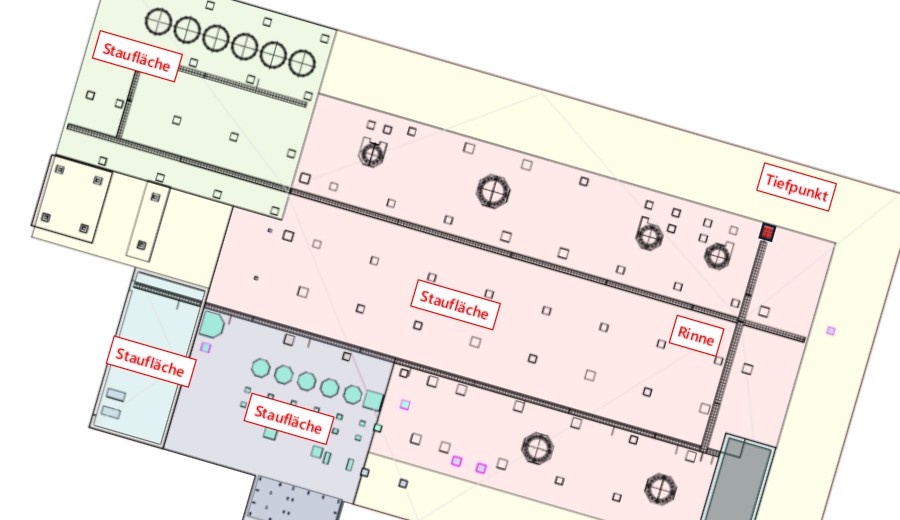
System Structuring of AwSV-Relevant Areas
INOPCO described the plant areas according to drainage, impoundment and retention surfaces, low points, containment areas, containment trays, underground pipes, channels, gutters, pump shafts as well as filling and transfer areas.
This created a transparent basis for the AwSV concept, verification, execution planning and later construction execution.
Key Areas of the AwSV Concept
Process equipment, fire protection, construction execution and building design as an integrated safety conceptProcess Equipment and Operation
Analysis of media, materials, tanks, units, pipework, nozzles, process technology, safety equipment, overfill protection and leakage detection systems.
- Description of operating mode
- Assessment of leakage scenarios
- Coordination with operation, maintenance and process equipment
Fire and Explosion Protection
Consideration of fire protection requirements relating to retention, extinguishing water, grounding, lightning protection and safe execution.
- Calculation of required extinguishing water volumes
- Consideration of grounding and lightning protection
- Coordination of technical and approval-related requirements
Construction Execution and Quality Assurance
Definition of requirements for construction execution, ongoing inspections, tightness verification, approvals and certificates.
- Inspection and tightness verification
- Approvals and certificates
- Specifications for construction execution and documentation
Building Design and Constructive Details
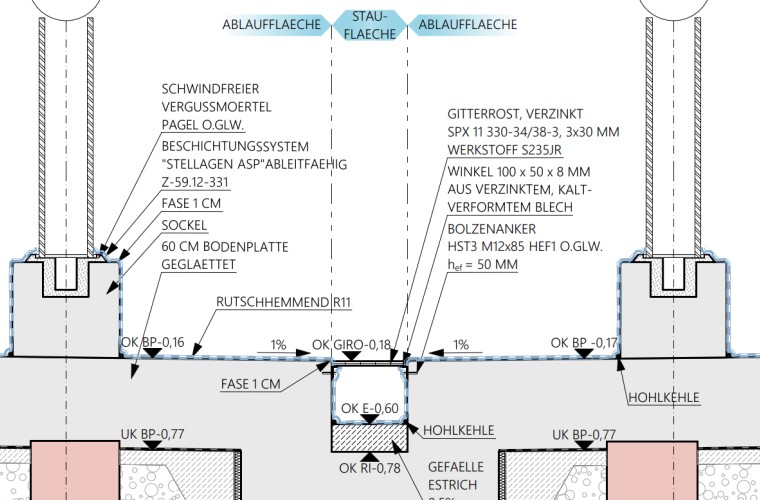
Planning of sealed surfaces, layer build-ups, joints, penetrations, containment areas and retention zones with approved materials.
- Dimensioning of sealed surfaces and retention areas
- Joint layout, joint plates and penetration details
- Definition of approved construction materials and application procedures
Part 1: Analysis, Protection Objectives and AwSV Concept
Requirements and Approval Scope
Review and analysis of requirements, approval scope and affected plant components.
Protection Objectives and Construction Products
Identification of protection objectives and derivation of requirements for steel, concrete, floor drains, joint plates and penetrations.
System Structuring and Verification
Preparation of diagrams and sketches as well as calculation of retention volumes and penetration depths.
Part 2: Execution Planning and Tendering Basis
Transfer into Execution Planning
Transfer of the AwSV concept results into detailed execution plans with material and processing specifications.
System Solution and Detail Planning
Planning of FD concrete, DIBt-approved coating systems, joint plate systems and constructive AwSV details.
Bill of Quantities and Tendering Basis
Preparation of bills of quantities for coating systems, coating works and concrete works with FD concrete and joint plate systems.
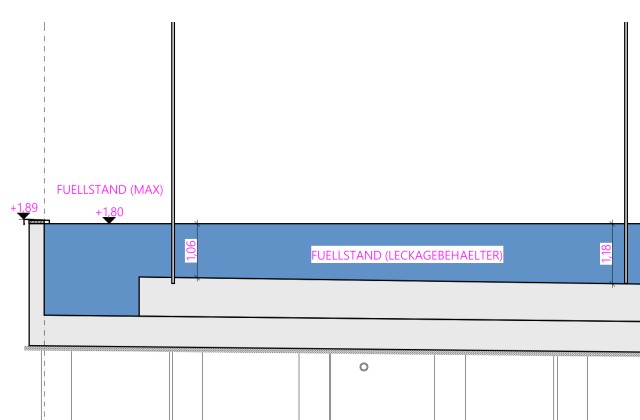
Verification and Technical Implementation
The retention volume was verified using filling level simulations. Depending on the media used, a DIBt-approved coating system was specified for the tank farm. The floor slab of the process plant was designed as FD concrete.
The planning considered the requirements of the DAfStb BUmwS guideline and DWA-A 786. Verification included crack width limitation, system structuring, material selection and the definition of suitable joint and sealing systems.
Results
- Overview of relevant regulations and coordination results
- AwSV concept with protection objectives, system structuring and verification
- Calculation of retention volumes and penetration depths
- Execution details, system documentation and bill of quantities